Pull on an old, stretched-out hoodie and notice how your energy shifts. Now imagine putting on a crisp shirt and tailored pants instead. Different feeling, right? Same person, completely different mental state.
This isn’t your imagination. Clothing genuinely affects mood and behavior in measurable ways, and psychologists have spent years studying exactly why.
The good news is you don’t need a closet overhaul to use this to your advantage. Sometimes one well-chosen piece, even something picked up through a yard of deal, is enough to shift how a day feels.
So, can clothes really influence your mood and behavior? Let’s answer that properly.
Is There Actual Science Behind This?
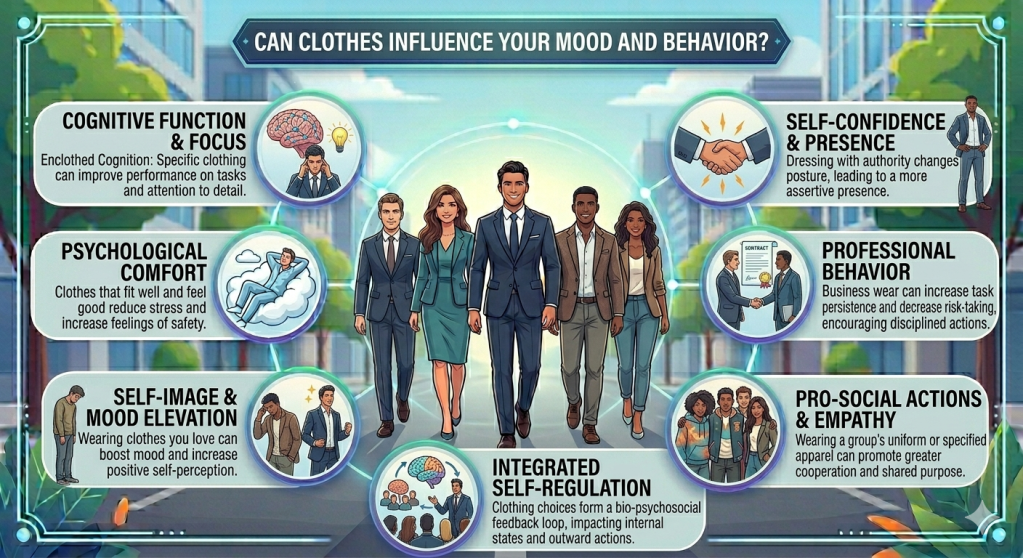
Yes. The clearest evidence comes from a concept called enclothed cognition, a term coined by researchers studying how clothing affects cognitive processes.
In one well-known study, participants wearing a lab coat described as a doctor’s coat performed better on attention-based tasks than participants wearing the same coat described as a painter’s coat. The clothing was identical. The meaning attached to it wasn’t, and that meaning changed behavior.
This tells us something important: it’s not just the fabric on your skin. It’s what that fabric represents to your brain.
Why Symbolic Meaning Matters So Much
Clothes carry symbolic weight based on personal experience and cultural association. A suit might represent authority. Workout clothes might represent discipline or energy. Pajamas might represent rest and low effort.
When you wear something, your brain often responds to that symbolic meaning, adjusting mood and behavior to match, even subconsciously.
How Specific Clothing Choices Affect Mood
Different elements of an outfit trigger different psychological responses. Here’s how some of the most common factors play out.
Color and Emotional Response
Color psychology suggests that certain shades trigger specific emotional reactions. Red is often associated with energy and boldness. Blue tends to promote calm and trust. Black frequently reads as authoritative or sleek.
While individual reactions vary, choosing colors intentionally based on how you want to feel, rather than purely on trend or habit, can subtly shift your mood throughout the day.
Fit and Physical Comfort
Tight, restrictive clothing can create physical tension that translates into mental tension. Loose, ill-fitting clothing can create a sense of sloppiness or low energy.
Properly fitted clothing tends to support a more neutral, comfortable baseline, allowing mood to be shaped by other factors rather than constant physical distraction.
Fabric and Sensory Experience
Soft, breathable fabrics often promote comfort and ease. Stiff, scratchy, or overly synthetic fabrics can create subtle irritation throughout the day, even if it’s not consciously noticed.
This sensory experience plays a quiet but consistent role in overall mood, particularly during long days where you’re wearing the same outfit for extended periods.
Does Clothing Affect Behavior, Not Just Mood?
This is where things get particularly interesting. Multiple studies suggest clothing doesn’t just shift internal feelings. It actually changes external behavior and performance.
Performance and Productivity
Research has shown that people wearing formal business attire often perform better on tasks requiring abstract thinking compared to those in casual clothing. The formal clothing seems to trigger a more focused, professional mindset.
This is part of why some companies maintain dress codes even in industries where strict formality isn’t operationally necessary. The clothing itself supports a certain type of behavior.
Confidence and Social Interaction
Wearing clothing that feels confident and well-suited to a situation often leads to more confident body language and social behavior. This becomes a visible feedback loop: feeling good leads to acting more assured, which often leads to more positive social responses.
Risk-Taking and Decision-Making
Some research suggests that clothing associated with power or authority can influence decision-making patterns, including increased willingness to take calculated risks or assert opinions during discussions or negotiations.
This doesn’t mean clothing alone determines outcomes, but it does appear to play a measurable role in shaping the mindset someone brings into a situation.
Why This Matters in Everyday Life
Understanding this connection isn’t just academically interesting. It has real, practical applications for how you approach daily routines.
Working From Home
Many people who work remotely notice a difference in motivation and focus depending on whether they get fully dressed or stay in loungewear all day. This isn’t laziness. It’s enclothed cognition in action, with comfortable, low-effort clothing reinforcing a low-effort mindset.
Getting dressed with some intention, even for a home office, can help maintain a more productive mental state throughout the workday.
Important Meetings or Events
Choosing an outfit that feels confident and appropriate for an important meeting or event can genuinely help mentally prepare for the situation, not just visually present well for it.
This is part of why many people have a specific “important day” outfit they consistently return to. It’s not superstition. It’s a learned association between that clothing and a confident, focused mindset.
Difficult or Low Energy Days
On days when motivation feels low, deliberately choosing slightly more put-together clothing, rather than defaulting to the most comfortable option available, can help shift mood and energy levels, even subtly.
This doesn’t require formal wear. Simply choosing a clean, well-fitted casual outfit over wrinkled loungewear can make a noticeable difference.
Building a Mood-Supportive Wardrobe
Knowing that clothing affects mood and behavior raises a practical question: how do you actually build a wardrobe that works with this, rather than against it?
Start by paying attention to how specific pieces make you feel. Notice which outfits consistently leave you feeling confident, calm, or energized, and which ones tend to drag your mood down.
From there, prioritize:
- Comfort and proper fit, since physical discomfort consistently undermines positive mood.
- Colors that align with how you want to feel, rather than colors chosen purely out of habit.
- A few reliable, confidence-boosting pieces you can return to on difficult or important days.
- Quality over quantity, since well-maintained clothing tends to support better self-image than worn-out alternatives.
None of this requires a large wardrobe or significant spending. Watching for a genuine yard of deal on quality, well-fitted basics is often enough to build a mood-supportive wardrobe gradually, without financial strain.
A Simple Way to Test This Yourself
If this concept feels abstract, try a small experiment. On two similar days, wear noticeably different outfits, one comfortable and put-together, one sloppy or overly casual, and pay attention to differences in focus, mood, and energy.
Most people notice a measurable difference fairly quickly, which makes the abstract psychology feel a lot more concrete.
Conclusion
So, can clothes influence your mood and behavior? Based on both psychological research and everyday experience, the answer is clearly yes.
Fit, color, fabric, and the symbolic meaning attached to specific clothing all play a role in shaping mood, focus, and even decision-making throughout the day.
This connection doesn’t require an expensive or extensive wardrobe to use effectively. Paying attention to how clothing makes you feel, and occasionally taking advantage of a smart yard of deal on quality pieces that genuinely support a positive mindset, can meaningfully improve daily mood and behavior over time.
The next time you’re choosing what to wear, remember that you’re not just deciding how you’ll look. You’re influencing how you’ll think and feel for the rest of the day.
FAQs
1. What is enclothed cognition? Enclothed cognition is the psychological concept describing how clothing affects the wearer’s thoughts, mood, and behavior, often based on the symbolic meaning attached to specific garments.
2. Can wearing formal clothing actually improve focus? Some research suggests yes. Formal attire has been linked to improved performance on tasks requiring abstract thinking, likely due to the professional mindset it triggers.
3. Does staying in loungewear all day really affect motivation? For many people, yes. Comfortable, low-effort clothing can reinforce a similarly low-effort mindset, which is why getting dressed with some intention often supports better focus, even while working from home.
4. Do colors in clothing genuinely affect mood? Color psychology suggests certain shades trigger specific emotional responses, though individual reactions can vary. Many people notice consistent personal patterns once they pay attention.
5. Do I need expensive clothing to benefit from this effect? Not at all. Comfort, fit, and personal association matter more than price. A well-chosen piece from a smart yard of deal can support a positive mindset just as effectively as an expensive alternative.


